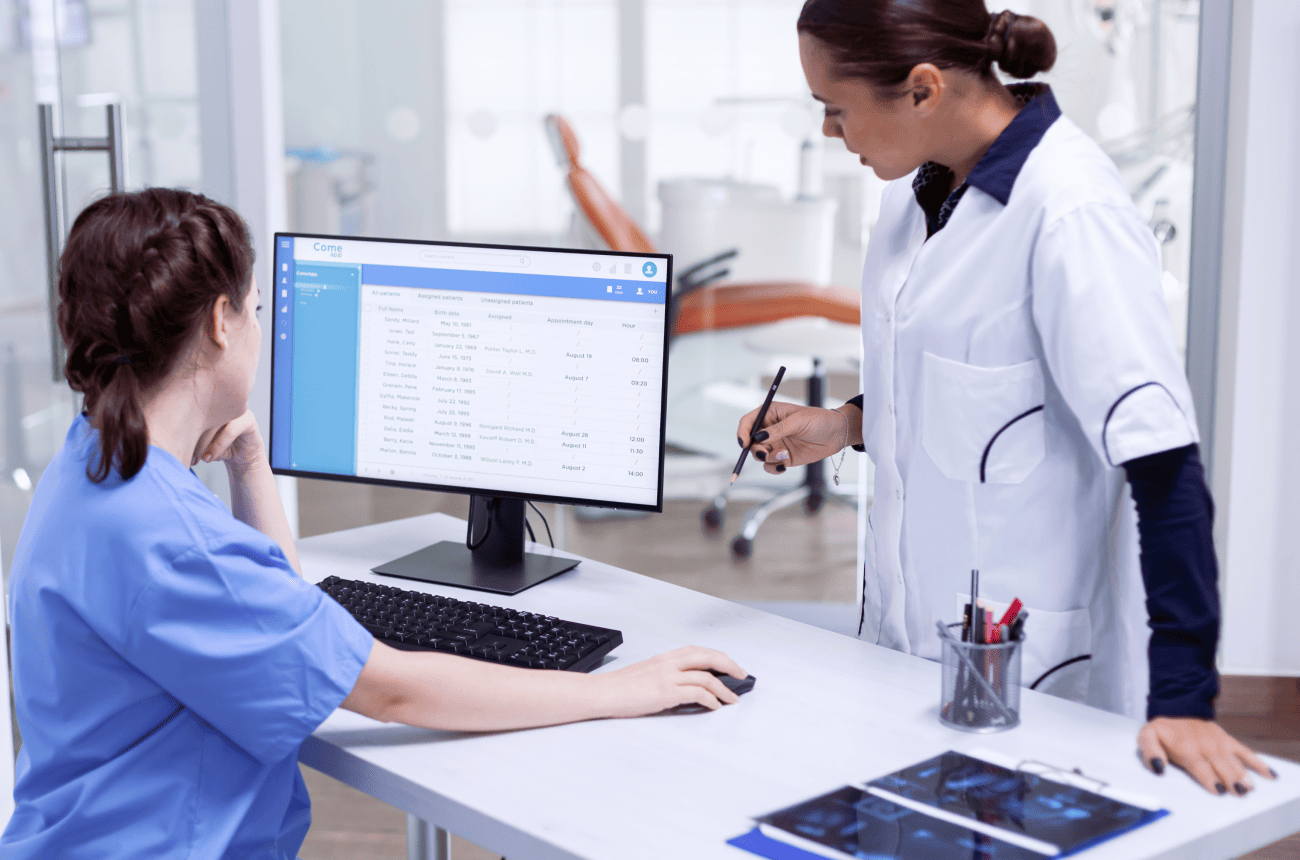
In many medical practices, the phone starts ringing before the first patient even walks in.
It is about booking appointments, rescheduling, prescription requests, opening hours or the question of which doctor is responsible. Every request is valid - but by no means every one has to be answered personally on the phone.
The real problem is not the calls themselves, but the sheer number of recurring administrative requests that interrupt the front desk team every day.
Reducing the phone load in a medical practice therefore does not mean being less reachable. It means offering patients suitable alternatives and giving the practice team more time for the conversations where personal contact really matters.
Where do most phone calls come from?
Before a practice can reduce its phone load, it is worth looking at the most common reasons for incoming calls.
These include, among others:
- booking or rescheduling appointments
- requesting prescriptions
- questions about opening hours
- information on preparing for an appointment
- finding the right doctor
- general organisational questions
None of these requests is unusual. Together, however, they make up a large part of the daily phone volume.
The key question is therefore not: How do we prevent calls?
But: Which requests really have to be handled by phone?
1. Offer online appointment booking
One of the simplest ways to reduce the phone load in a medical practice is online appointment booking.
If patients can book appointments themselves online, they no longer have to call during opening hours for many simple appointment requests.
At the same time, appointments can be requested in the evening or at the weekend - exactly when many people have time for it.
Online appointment booking can thus absorb part of the recurring calls and give the front desk more room for other tasks.
2. Make answers easy to find
Many phone calls arise not because of an appointment, but because patients quickly need a piece of information.
For example:
- “Do I have to come in fasting?”
- “What do I need to bring to the appointment?”
- “What are your opening hours?”
- “How can I request a prescription?”
If this information is easy to find on the website or through digital communication channels, many of these questions no longer have to be asked by phone.
What matters is not only that the information exists somewhere. It has to be easy to find and understand.
Often it is exactly these small improvements that make a noticeable difference in everyday practice.
3. Create digital alternatives for standard requests
Not every request has to happen by phone.
Many patients want to reschedule an appointment, request a prescription or clarify an organisational question - as quickly and simply as possible.
When such processes are possible digitally, they can absorb part of the phone volume. At the same time, patients gain more flexibility and the front desk team is relieved.
It is important here that digital offerings genuinely simplify the existing practice workflow. An additional channel that then has to be processed manually does not solve the problem - it only shifts it.
4. Automate recurring requests
Many conversations at the front desk follow a similar pattern every day.
This is exactly where automation can provide sensible support.
With Mira, patients get a digital point of contact around the clock. Mira answers common administrative questions, captures structured information about the request, takes the practice's stored scheduling rules into account and can enter appointments directly into the connected practice management system.
This means recurring standard requests can be handled automatically, while more complex matters or situations that need personal support stay with the practice team.
The goal is not to automate every contact.
The goal is to relieve the team of routine requests, so that it has time for the conversations where it is really needed.
5. Keep the important conversations on the phone
Not every form of communication should happen digitally.
There are situations where a personal conversation is indispensable. These include, for example:
- complex appointment coordination
- patients who need personal support
- sensitive medical matters
- emergencies
- questions that require a medical assessment
The goal is therefore not to avoid phone calls entirely.
The goal is for the calls that remain to be the ones that truly need human support.
Fewer interruptions - not less patient contact
Reducing phone calls does not mean limiting contact with patients.
On the contrary.
Routine requests can be handled through suitable digital channels, while the practice team gains more time for personal conversations, complex matters and high-quality care.
It can also be more pleasant for patients: they do not have to call for every organisational question and, at the same time, do not depend on reaching the practice exactly when the phone line is already overloaded.
Conclusion
The phone will remain an important part of every medical practice in the future, too.
But not every organisational request has to go through the handset.
With online appointment booking, easily accessible information, digital service offerings and intelligent automation, call management in the practice can be improved in a targeted way.
It is not about having as few calls as possible.
It is about fewer unnecessary interruptions - and more time for the conversations that truly matter.
Teilen Sie diesen Beitrag